Agricultural Origins of Traditional Mulling Spices
Metabolic Suppression in Agricultural Tubers
The successful maintenance of a localized winter supply chain relied heavily on the preservation of dense carbohydrate stores, primarily in the form of root vegetables and tubers (potatoes, turnips, carrots, and beets). These agricultural products are living biological entities that continue to respire long after harvest. The logistical challenge was to design storage infrastructure that could suppress this metabolic respiration without inducing tissue freezing, which destroys cellular integrity.
Metabolic suppression is achieved through precise thermal regulation. The target operating temperature for most historical subterranean storage facilities—commonly referred to as root cellars—was maintained strictly between 32°F and 40°F (0°C to 4°C). At these temperatures, the conversion of starches to sugars is halted, and biological degradation by rot-inducing microorganisms is severely retarded.
Thermodynamics of Earth-Sheltered Structures
The engineering of these facilities capitalized on the geothermal mass of the earth. Below the regional frost line—the maximum depth to which groundwater in soil is expected to freeze—the earth maintains a relatively constant temperature year-round, typically hovering around 50°F (10°C). By excavating structures into hillsides or below ground level, historical agriculturalists utilized the surrounding soil as a massive thermal buffer against the extreme atmospheric temperature fluctuations of the winter surface environment.
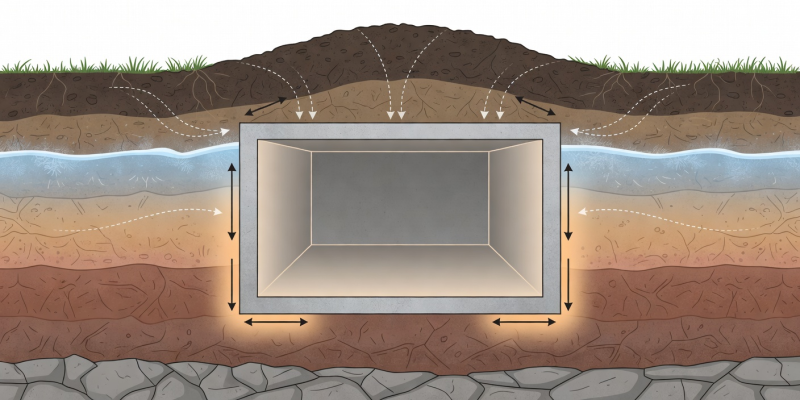
However, thermal regulation alone is insufficient for tuber viability. Moisture management is equally critical. Root vegetables lose moisture to the surrounding air via transpiration. If the ambient air within the storage facility is too dry, the crop desiccates, shrivels, and loses mass. Therefore, these facilities were engineered to maintain a relative humidity between 85% and 95%.
Humidity Control and Ventilation Systems
To achieve this high humidity without relying on modern mechanization, root cellars were typically constructed with unsealed earthen floors. Moisture naturally wicked up from the deeper water table, evaporating slowly into the enclosed space. In excessively dry winter conditions, the logistical protocol required personnel to manually cast water over the dirt floor or onto layers of sand packed around the root crops.
Concurrently, the respiration of thousands of pounds of stored vegetables resulted in the continuous off-gassing of ethylene and the accumulation of moisture vapor. Left unchecked, this environment would reach a dew point that caused condensation on the structural ceiling, dripping back onto the crop and precipitating rampant fungal rot. To counter this, facilities employed passive ventilation systems: a low intake vent to draw in dense, cold exterior air, and a high exhaust vent to expel warmer, moisture-laden air.
| Botanical Category | Target Temperature | Relative Humidity | Ventilation Requirement |
|---|---|---|---|
| Potatoes (Solanum tuberosum) | 38°F - 40°F | 90% - 95% | Moderate (to clear ethylene) |
| Carrots (Daucus carota) | 32°F - 35°F | 95% - 98% | Low (often packed in damp sand) |
| Onions (Allium cepa) | 32°F - 35°F | 65% - 70% | High (requires separate, dry zone) |
The structural design of the root cellar stands as a critical intersection of architecture, thermodynamics, and agricultural logistics. By successfully isolating botanical assets from the surface winter environment, these facilities secured the localized carbohydrate supply chain required to sustain rural populations until the spring agricultural thaw.